Key Takeaways
- 3I/ATLAS, the third-known interstellar object, unexpectedly brightened while hidden behind the Sun.
- Astronomers now report the comet appears to have developed a distinct blue hue.
- The color change may reveal new details about the comet’s chemical composition and ancient origins.
A Cosmic Visitor Turns Blue
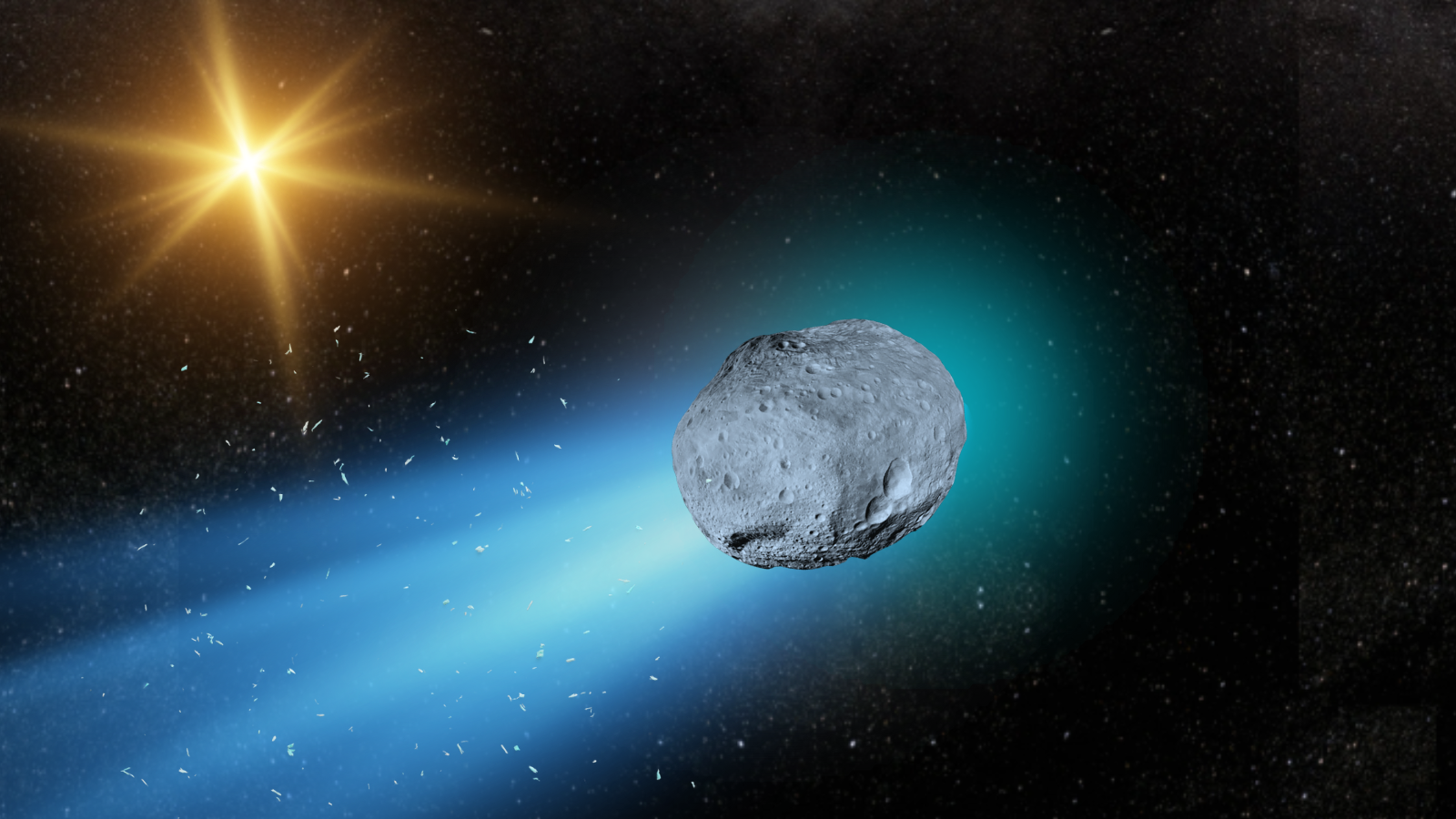
Astronomers are once again captivated by the interstellar comet 3I/ATLAS, which has begun showing a blueish hue after a sudden and dramatic brightening event. Hidden behind the Sun for several weeks, the object re-emerged into view with this new coloration, marking the third time it has appeared to change color since entering our solar system.
3I/ATLAS is no ordinary comet. It’s an interstellar traveler, the third of its kind ever detected — following 1I/‘Oumuamua in 2017 and 2I/Borisov in 2019. Racing through space at over 130,000 mph (210,000 km/h), it’s thought to be over 7 billion years old, ejected from its original star system billions of years ago. Now, as it sweeps past our Sun, scientists are watching closely for clues about the early galaxy and the building blocks of distant worlds.
A Sudden Brightening Behind the Sun
The comet reached its perihelion, or closest point to the Sun, on October 29, passing about 130 million miles (210 million km) from the star. During this period, 3I/ATLAS was largely invisible from Earth, but spacecraft equipped with solar and space-viewing instruments continued monitoring it.
Researchers noticed something striking: the comet’s brightness surged by several orders of magnitude — far beyond what solar heating alone could explain. This mysterious outburst may indicate a sudden release of volatile gases, suggesting that 3I/ATLAS is far more active than expected for such an ancient body.
In a recent study (not yet peer-reviewed), scientists reported that the comet appeared “distinctly bluer than the Sun,” implying that certain gases — possibly carbon monoxide or ammonia — were escaping from beneath its icy surface. These gases can emit blue light when energized by solar radiation, hinting at a complex internal chemistry.
A History of Color Changes
This isn’t the first time 3I/ATLAS has surprised astronomers with its palette. When first observed in July 2025, it glowed reddish, likely due to dust particles scattering sunlight. By September, it briefly turned green, a hue often associated with cyanide and dicarbon gases in comets.
Each time, the color change faded, leaving scientists puzzled. The recent emergence of blue may again be temporary — or it could signal a new phase in the comet’s journey. Only continued observation will tell.
Astrophotographers have already begun capturing the phenomenon. The Hubble Space Telescope recently imaged the comet’s teardrop-shaped dust cocoon, while the Gemini Observatory showed earlier rainbow-like streaks — artifacts of imaging filters, not actual hues. But this time, the blue glow appears to be real and measurable, adding a fresh twist to 3I/ATLAS’s unpredictable behavior.
What Comes Next for 3I/ATLAS
Over the coming weeks, stargazers in the Northern Hemisphere will have a chance to glimpse the comet through telescopes or powerful binoculars as it moves northward in the night sky. Although too faint for the naked eye, it will grow increasingly observable through December, when it makes its closest approach to Earth on December 19 — about 168 million miles (270 million km) away.
During that time, two European Space Agency spacecraft may even pass through its extended tail, offering unprecedented close-up data. These observations could clarify whether the comet’s evolving colors are linked to its internal chemistry, sunlight exposure, or surface changes triggered by interstellar radiation over eons.
A Window Into the Galactic Past
3I/ATLAS is more than just a visitor — it’s a time capsule from another star system. Its icy surface and erratic outbursts offer rare insight into how comets formed billions of years ago in distant corners of the Milky Way.
While some fringe theories suggest that the comet could be artificial or of alien origin, mainstream astronomers maintain that 3I/ATLAS behaves exactly as a natural comet should — just one shaped by a longer, colder, and more violent journey than any native to our Sun’s domain.
As it streaks past and prepares to leave the solar system forever, scientists hope its fleeting flashes of red, green, and blue will help decode the chemistry of the cosmic frontier — one color at a time.
Disclaimer: The information in this article is for general purposes only and does not constitute financial advice. The author’s views are personal and may not reflect the views of GameDegen.com. Before making any investment decisions, you should always conduct your own research. GameDegen.com is not responsible for any financial losses.